
Spray Foam Insulation
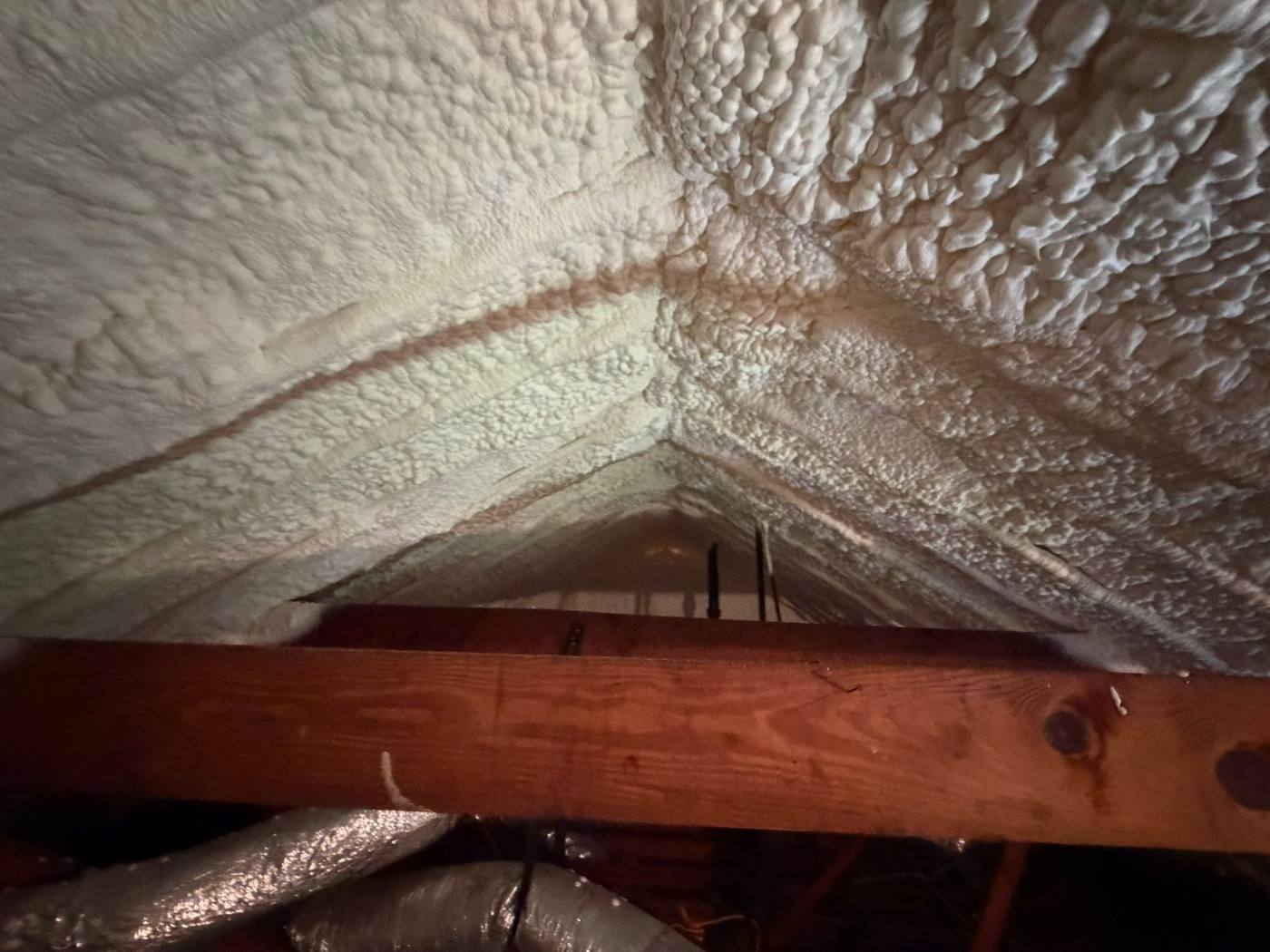
Spray foam goes on as a liquid, expands into every crack and gap it touches, and cures into a solid air seal. There are two kinds, open-cell and closed-cell, and they cost, perform, and fit different jobs. We install both, and we'll tell you straight which one your project actually needs.
Our Honest Take
In a hot, humid place like Georgia, we usually lean toward closed-cell for exterior walls, conditioned attics, and crawlspaces, because it doubles as a vapor barrier. Open-cell makes more sense for interior walls and soundproofing, where the lower cost and better sound dampening matter most. We'll recommend what fits your project, not whichever one costs more.
One rule we don't bend: open-cell foam can't go on metal. If you're insulating a metal building, pole barn, or metal roof deck, closed-cell is the only option. Our commercial insulation page covers that in more detail.
Open-Cell vs. Closed-Cell: Which Do You Need?
It comes down to where the foam is going and what it needs to do. We'll figure that out with you at a free assessment before we recommend either one.
| Open-Cell | Closed-Cell | |
|---|---|---|
| R-value per inch | 3.5 | 6–7 |
| Cost | $1.85–$2.30/sq ft | $1.85–$2.00/sq ft/in |
| Vapor barrier | No | Yes |
| Soundproofing | Excellent | Good |
| Water resistance | Poor | Excellent |
| Works on metal surfaces | No | Yes |
| Best for | Interior walls, basements, soundproofing | Exterior walls, attics, crawlspaces, humid areas, metal buildings |
How Installation Works
We suit up, seal off the work area, and apply the foam in careful passes. Closed-cell goes on in thinner passes so it doesn't overheat and crack. Some contractors skip that to save time. We don't. The foam expands and cures within minutes, and we trim it flush with the framing so drywall or paint can go right over it.
You, your family, and your pets will need to be out of the house for at least 24 hours while the foam finishes curing and any fumes clear. We'll give you the exact all-clear time before we leave.
We Measure What We Spray
Some contractors spray closed-cell thinner than spec to save on material. We measure and document the thickness on every job. A standard wall needs about 2 inches to be properly insulated, and we never cut that short.
Existing Walls: The Drywall Has to Come Off
Spray foam needs an open cavity so it can be applied and checked properly. It can't be injected through a small hole the way loose-fill can. If you want spray foam behind a finished wall, the sheetrock comes off first and goes back up once the foam cures. If you'd rather keep your drywall, blown-in fiberglass through 6-inch drilled holes is the way to go. Our blown-in page explains how that works.
What Spray Foam Does Well
Stops Drafts and Air Leaks
It expands to fill every crack and gap, which stops drafts and energy loss where they start. Loose-fill insulation can't do that on its own.
Fits Irregular Spaces
It flows around pipes, wiring, and odd framing that rigid board insulation can't reach.
Closed-Cell Adds Rigidity
It bonds to the framing and adds real wind resistance, which counts for something during Georgia storm season.
Doesn't Sag or Settle
Unlike loose-fill, spray foam holds its shape and its R-value for the life of the home.
Keeps Pests Out
Closed-cell foam in particular is dense enough that insects and rodents have a hard time getting through.
Safe Once Cured
Once it fully cures, per the manufacturer's re-entry time (usually 24–48 hours), you can safely be back in your home.
How much does spray foam insulation cost?
Open-cell runs $1.85–$2.30 per sq ft depending on thickness. Closed-cell runs $1.85–$2.00 per sq ft, per inch. Because closed-cell usually goes on thinner to hit the same or better R-value, the total often ends up close to open-cell even though the per-inch price is higher. Your actual cost depends on square footage, the thickness you need, and how easy the space is to get to. We'll give you an exact, itemized quote after a free assessment.
Get My Exact NumberSpray Foam FAQ
We don't recommend it. Spray foam takes protective gear, proper ventilation, and precise mixing and application to cure correctly. Foam that's applied wrong can crack, off-gas longer than it should, or never reach its rated R-value. This is a job for a professional.
Closed-cell is essentially permanent and doesn't break down. Open-cell also lasts the life of the home, since it doesn't sag or settle the way loose-fill can.
Closed-cell foam is dense and rigid enough that insects and rodents have a hard time getting through it. That helps in Georgia, where pests are around all year. It doesn't replace pest control, but it does close off a lot of ways in.
No. Spray foam has to be applied to an open cavity, so the sheetrock comes off first and goes back up afterward. If you want to keep the drywall in place, blown-in fiberglass through small drilled holes is the practical option.
Not sure which spray foam is right for your project?
We'll walk your home for free and give you a straight answer. No pressure, no upsell. Financing is available through Hearth.
- 01 We inspect. Existing insulation, air leaks, ventilation, moisture, and how your attic and crawlspace are built.
- 02 We explain what we find. In plain English, while we're still at your house.
- 03 We recommend the right fix. Spray foam, blown-in, or air sealing, whichever actually fits your home, even if it is the smaller job.
- 04 You get it in writing. An itemized quote with no hidden fees. Financing is available through Hearth.
- 05 You decide. Take the time you need. No high-pressure sales, and no follow-up hounding.